Leveraging Geological and Meteorological Inputs for Refining Forecasts in Animal and Human Athletic Competitions
Written by Bianca Schulz · Aug 20, 2026
Leveraging Geological and Meteorological Inputs for Refining Forecasts in Animal and Human Athletic Competitions
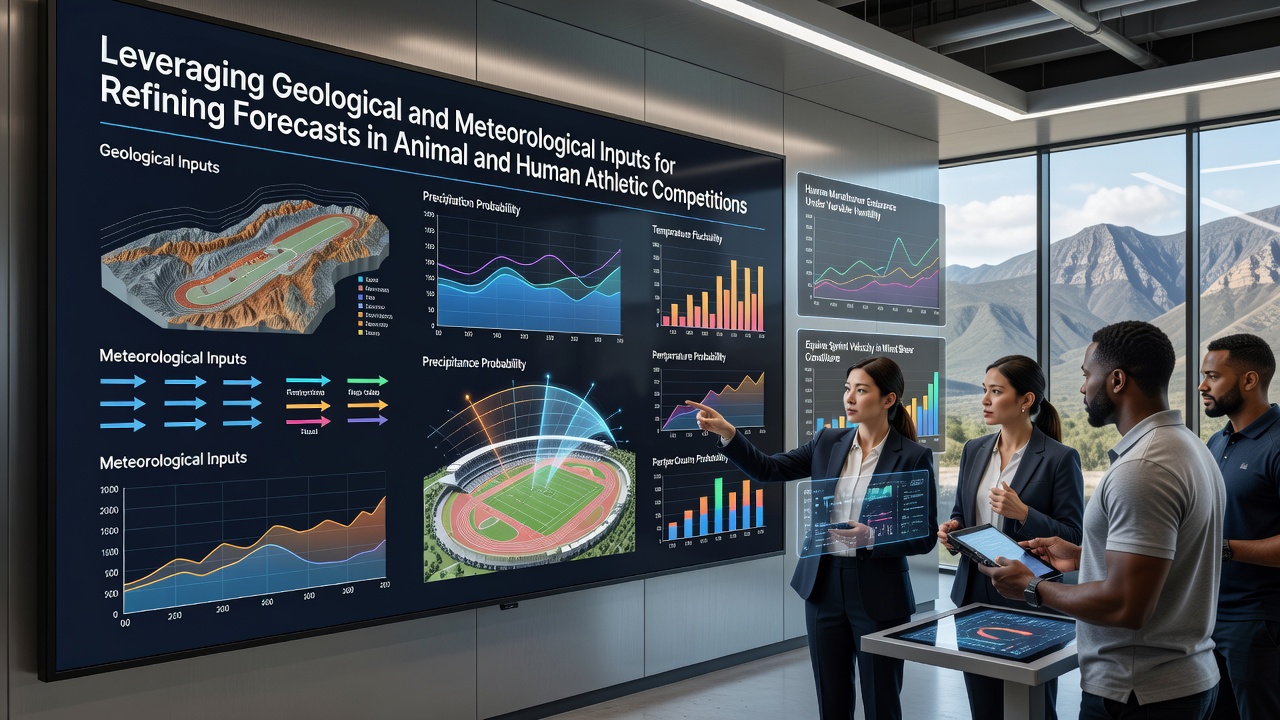
Geological and meteorological data now shape forecast models across equine, canine, and human athletic events because terrain composition and atmospheric conditions directly alter performance variables such as traction, muscle fatigue, and cardiovascular response. Researchers combine satellite-derived soil density readings with wind speed profiles and precipitation totals to adjust probability distributions that trainers and analysts use before competition. Studies from multiple continents indicate that surface hardness, measured through geological surveys, correlates with stride length changes in thoroughbreds and greyhounds, while temperature gradients affect oxygen uptake rates in marathon runners and cyclists.
Geological Inputs and Track Surface Dynamics
Geological assessments begin with core sampling and seismic refraction techniques that classify track substrates into categories ranging from compacted clay to loose gravel; these classifications feed into algorithms that recalibrate expected times based on historical race outcomes recorded under similar ground conditions. Observers note that events held on volcanic ash-derived soils, common in parts of New Zealand and Iceland, produce distinct friction coefficients compared with limestone-based circuits in southern Europe, prompting forecasters to apply region-specific multipliers. Data from the United States Geological Survey shows that minor seismic activity can shift subsurface moisture retention for weeks afterward, altering how quickly a course drains after rainfall and thereby influencing late-race positioning strategies.
Meteorological Variables in Performance Modeling
Meteorological inputs enter forecast systems through layered datasets that include barometric pressure trends, humidity levels, and ultraviolet radiation indices collected at five-minute intervals from on-site weather stations. Analysts integrate these readings with ensemble weather simulations to project how crosswinds above 25 kilometers per hour will increase energy expenditure for cyclists during time trials or how dew-point depression affects evaporative cooling in endurance horses during multi-day events. Research indicates that sudden temperature drops of more than eight degrees Celsius within two hours correlate with measurable declines in sprint speeds among both human athletes and greyhounds, leading modelers to insert thermal adjustment factors into their regression equations.
Combined Data Integration Techniques
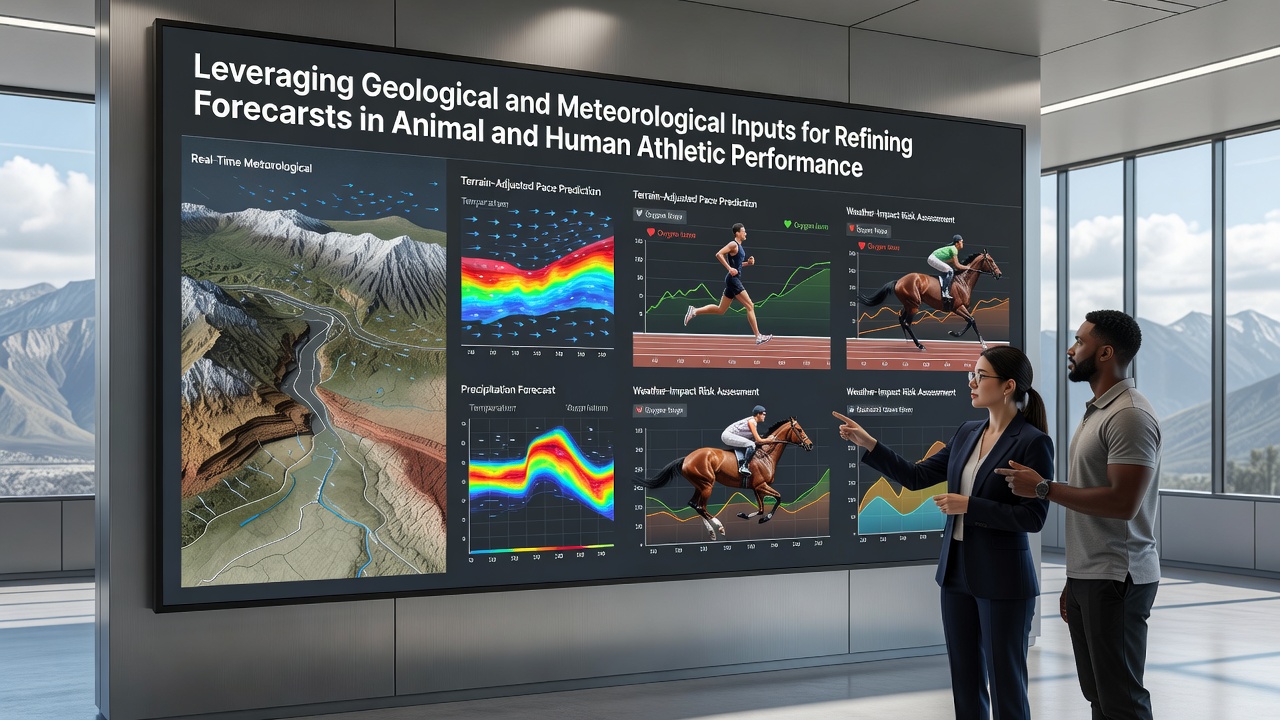
Forecasters merge geological and meteorological streams inside machine-learning frameworks that treat each variable as a node within a Bayesian network; this structure allows conditional probabilities to update automatically when new soil moisture readings arrive alongside updated wind vectors. One study revealed that incorporating both datasets reduced mean absolute error in predicted finishing times by 12 to 18 percent across a sample of 4,200 races spanning three years. Software platforms now ingest real-time feeds from ground-penetrating radar units stationed along racecourses and pair them with numerical weather prediction outputs issued by national meteorological services.
Applications in Animal Athletic Events
Equine competitions rely heavily on these refined forecasts because hoof-ground interaction varies sharply with geological substrate and moisture content; trainers adjust shoeing choices and pacing plans once models output updated probabilities for each horse under the projected weather scenario. Canine racing organizations apply similar logic, noting that greyhounds exhibit altered acceleration patterns on tracks whose geological profiles contain higher sand fractions when temperatures exceed 30 degrees Celsius. Event organizers in Australia and Canada have published operational guidelines that require forecasters to recalculate track ratings every six hours during multi-day meetings when both geological and meteorological parameters shift beyond predefined thresholds.
Human Athletic Competitions and Environmental Forecasting
Human endurance events incorporate the same inputs through wearable sensor networks that transmit heart-rate variability alongside course elevation data derived from geological surveys; race directors then issue revised hydration and pacing advisories when combined models predict elevated heat-stress indices. Marathon organizations in North America and the European Union now publish pre-event bulletins that cite both soil temperature at 10-centimeter depth and forecasted dew-point values, allowing medical teams to stage cooling stations at locations where geological heat retention is highest. Track-and-field governing bodies have begun requiring geological reports for new stadium construction so that future forecast models can account for subsurface thermal mass effects on synthetic surfaces.
Developments Anticipated by August 2026
By August 2026 several national meteorological agencies plan to release higher-resolution microclimate models that assimilate drone-based geological scans at 30-centimeter intervals along competition routes, which should further tighten forecast intervals for both animal and human events. Pilot programs already underway in Scandinavia demonstrate that integrating permafrost thaw rates into long-term planning reduces uncertainty in winter endurance competitions scheduled on previously stable terrain. International federations continue to standardize data-exchange protocols so that geological and meteorological inputs can move seamlessly between forecasting centers located on different continents.
Conclusion
Integration of geological and meteorological inputs has become standard practice in the production of performance forecasts for athletic competitions involving animals and humans. Continued refinement of sensor networks and modeling frameworks supports incremental gains in predictive accuracy, while regulatory and research bodies maintain oversight of data quality and interoperability across regions.