Biomechanical Correlations Between Quadruped Racing and Bipedal Team Games: A Data-Driven Approach to Diversified Betting
Written by Henrik Klein · Sep 17, 2026
Biomechanical Correlations Between Quadruped Racing and Bipedal Team Games: A Data-Driven Approach to Diversified Betting
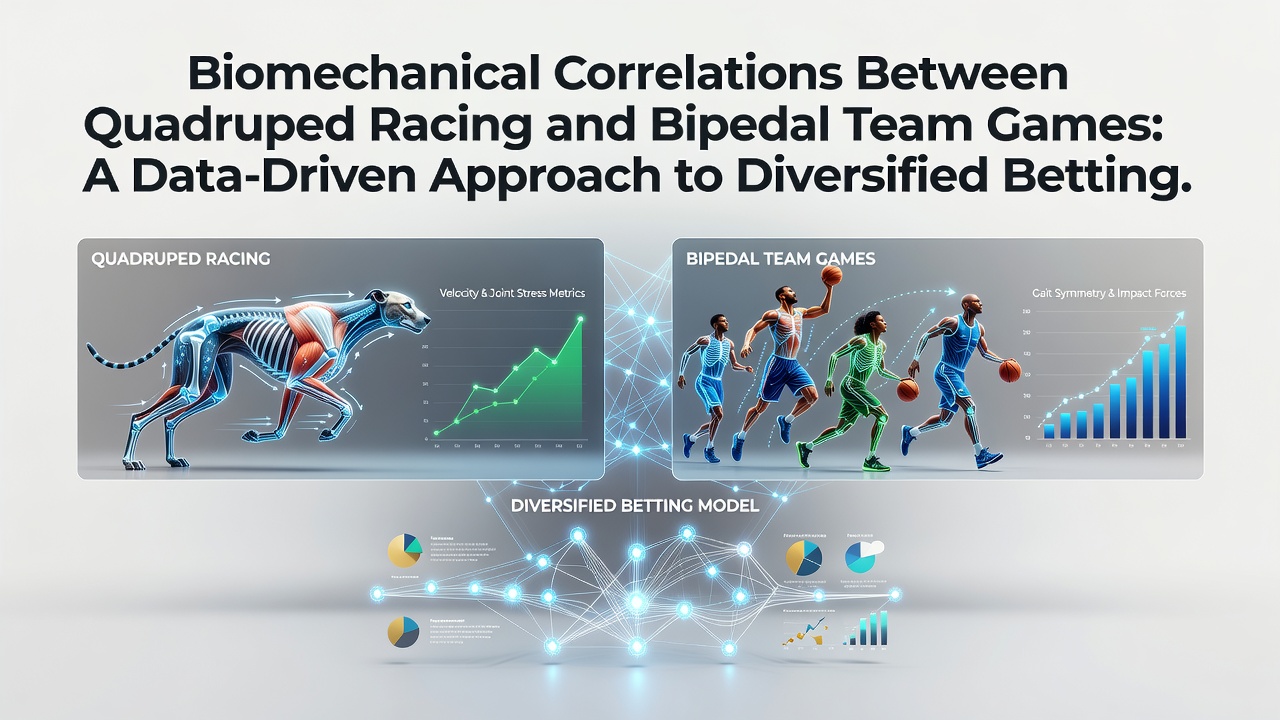
Biomechanical analysis reveals measurable overlaps between the propulsion mechanics of quadruped athletes in racing environments and the movement patterns of bipedal players in team competitions, where stride length, ground reaction forces, and joint torque data create transferable metrics that support diversified betting frameworks. Researchers have compiled locomotion datasets from equine and canine events alongside soccer, basketball, and rugby matches to identify shared variables such as peak power output during acceleration phases and recovery intervals between high-intensity bursts. These correlations emerge most clearly when kinematic sensors capture simultaneous recordings of limb coordination, allowing models to adjust probability calculations across event types rather than treating each sport in isolation.
Locomotion Signatures Shared Across Species
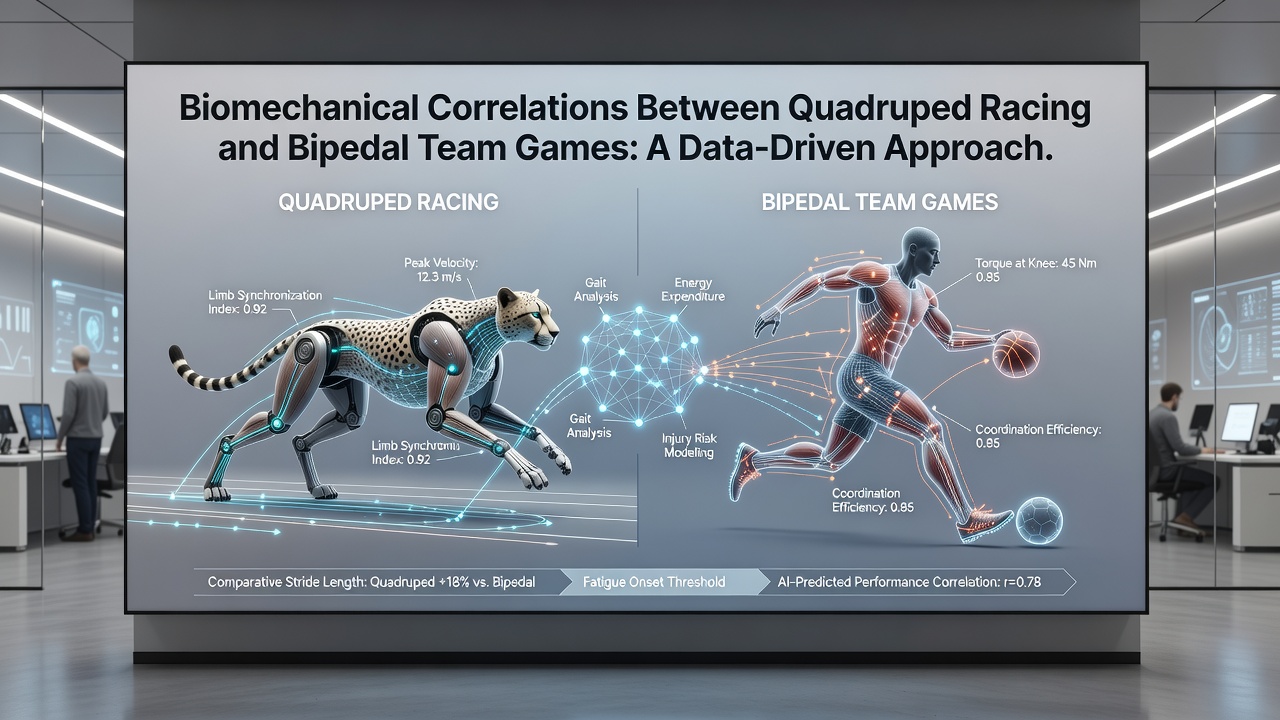
Quadruped racing produces distinct force application curves during the stance phase, where vertical and horizontal components combine to generate forward momentum, while bipedal team games display analogous loading patterns during cutting movements and directional changes. Studies from the Australian Institute of Sport demonstrate that peak vertical ground reaction forces in thoroughbred gallops reach 2.5 times body weight at speeds above 15 meters per second, values that align closely with elite basketball players executing layup drives where forces exceed 2.2 times body weight during takeoff. Observers note that both systems rely on elastic energy storage in tendons and ligaments, a mechanism that reduces metabolic cost and creates predictable fatigue thresholds across training cycles. Data collected through inertial measurement units shows that stride frequency adjustments in response to track surface changes mirror the step rate modifications athletes make when transitioning between hardwood and artificial turf, providing a quantitative bridge for cross-sport forecasting tools.
Energy Expenditure and Fatigue Modeling
Metabolic profiling indicates that quadruped racers and bipedal team participants follow comparable energy depletion curves when normalized for body mass and event duration, with anaerobic contributions dominating the initial 30 to 60 seconds followed by aerobic steady-state maintenance. In September 2026, longitudinal monitoring programs released updated figures showing that horses in 1600-meter races expend approximately 120 milliliters of oxygen per kilogram per minute during peak effort, a rate that parallels the oxygen uptake observed in midfield soccer players covering 10 to 12 kilometers per match. These parallels allow analysts to construct unified fatigue indices that factor in cumulative workload from prior events, adjusting implied probabilities when a quadruped competitor races on consecutive days or when a team plays multiple fixtures within a short window. Joint angle telemetry further refines these models by tracking hip and knee flexion ranges that signal impending performance decline before visible speed reductions appear.
Integrating Sensor Data for Cross-Domain Predictions
Wearable technology now streams synchronized datasets from both domains into centralized repositories, where machine learning algorithms identify covariance between variables such as hoof impact angles and foot strike patterns in human athletes. Canadian Sport Institute researchers published validation studies confirming that regression models trained on combined equine and soccer datasets achieve lower error rates in outcome prediction than single-sport baselines, particularly when incorporating surface compliance measurements and environmental temperature effects on muscle elasticity. The approach requires careful calibration of coordinate systems because quadruped spinal flexion adds a rotational degree of freedom absent in upright human posture, yet the underlying conservation of angular momentum during turns remains consistent enough to support direct parameter mapping. Practitioners apply these mappings to diversify stake allocation across race cards and league fixtures by weighting selections according to shared biomechanical stress indicators rather than isolated form guides.
Regulatory and Data Governance Considerations
Governing bodies including the Australian Sports Commission have established protocols for anonymized data sharing between racing authorities and team sport leagues, ensuring that biomechanical records remain detached from individual identities while still enabling aggregate model training. European regulators through the European Association for Sport Management similarly require transparent documentation of algorithm inputs when operators use cross-domain correlations for odds compilation. These frameworks emphasize audit trails that trace each variable back to its source measurement device, reducing discrepancies that arise when track geometry or court dimensions alter raw force readings. Compliance documentation further specifies that historical datasets must undergo periodic re-validation against current equipment standards to maintain predictive accuracy across seasonal transitions.
Conclusion
Biomechanical correlations between quadruped racing and bipedal team games supply a structured foundation for data-driven betting diversification, where locomotion metrics, energy profiles, and sensor-derived fatigue signals transfer across domains once coordinate and scaling adjustments are applied. Continued expansion of synchronized monitoring programs, particularly those scheduled for release phases in late 2026, will likely strengthen the statistical robustness of these integrated models while regulatory oversight maintains data integrity standards across jurisdictions.